
Bob Kendrick President of the Negro Leagues Museum looks to the past and future
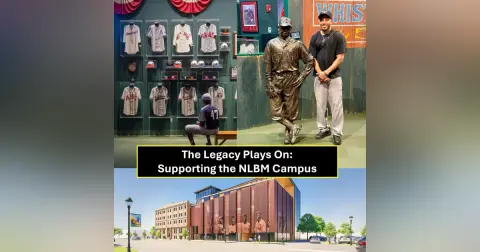
Bob Kendrick, President of the Negro Leagues Baseball Museum, (NLBM) Bob visits BaseballBiz On Deck and shares the stories of the past of the Negro Leagues and the mission to continue to share the stories of the leagues into the future with the museum Expanding the Negro Leagues Baseball Museum Plans for a new 35,000-square-foot museum and a Negro Leagues campus in Kansas City. The $55 million capital campaign includes restoration of the historic Paseo YMCA, where the Negro National Leagues ...

 Apple Podcasts

 Spotify

 YouTube

 iHeartRadio

 Amazon Music

 RSS Feed

 TuneIn

 Castro
Bob Kendrick, President of the Negro Leagues Baseball Museum, (NLBM)
Bob visits BaseballBiz On Deck and shares the stories of the past of the Negro Leagues and the mission to continue to share the stories of the leagues into the future with the museum
Expanding the Negro Leagues Baseball Museum
Plans for a new 35,000-square-foot museum and a Negro Leagues campus in Kansas City. The $55 million capital campaign includes restoration of the historic Paseo YMCA, where the Negro National Leagues was established in 1920. The building will become the Buck O'Neil Education and Research Center. https://www.nlbm.com/donations/
John Henry "Pop" Lloyd
Kendrick highlights Pop Lloyd's extraordinary career as a Negro Leagues star and one of baseball's greatest shortstops. Babe Ruth considered Lloyd the greatest baseball player he had ever seen. Derek Jeter noted how Pop was a power hitting shortstop.
Mark notes Wes Singletary's book on Lloyd as an enjoyable and informative read - https://www.amazon.com/dp/0786435720?lv=shuf&channelId=500&plpRedirect=mhFallback
The Importance of the Black Press
Black newspapers, including the Kansas City Call, Pittsburgh Courier, Florida Sentinel, Amsterdam News, and Chicago Defender, preserved essential stories about Negro Leagues players and their lives beyond the ballpark.
Effa Manley, Monte Irvin, Branch Rickey and Jackie Robinson
Newark Eagles owner, Effa Manley, foiled Branch Rickey's attempt to sign Monte Irvin a 5-tool star into MLB without compensation to the team. Rickey did not recognize the Negro Leagues contracts. He took away Jackie Robinson from the Kansas City Monarch signing without compensating the Monarch's owner. The movement of great talent to MLB caused the loss of Negro Leagues talent to MLB.
Negro Leagues Statistics Enter MLB Record Books
Kendrick reflects on his participation in the committee that helped bring Negro Leagues statistics into Major League Baseball's official records in May 2024. He emphasizes the importance of recognizing the leagues as major leagues and honoring their players' achievements. Bob notes that Rob Manfred was critical in making this happen.
Josh Gibson, Ty Cobb and Baseball's Historical Record
Kendrick explains why comparing Negro Leagues players with their Major League counterparts requires understanding the racial discrimination and hardships Black players endured. Bob notes “"It does not diminish Ty Cobb now that Josh Gibson name is above him as the all-time career batting average leader." 372 lifetime. Single season batting record in 1943, when he only hit 466. And folks, I'm gonna go out on a limb and say that ain't gonna be broken. That doesn't diminish Ty Cobb, it just speaks to how great Josh Gibson was”
The Tampa Rockets and Florida's Baseball History
The Tampa Rockets, were a talented Black baseball team that operated outside the organized Negro Leagues. Players including Walter Gibbons, Raydell Maddox, and Billy Fielder moved on to Negro Leagues teams. The role of the Florida Sentinel in promoting local Black baseball is also discussed.
Preserving the Legacy of Negro Leagues Players
Kendrick stresses the urgency of documenting players' stories while preserving their legacy for future generations. He discusses the influence of Buck O'Neil, who helped establish and shape the museum.
Buck O'Neil's Lasting Influence
Kendrick calls the museum the "house that Buck built," honoring O'Neil's leadership and dedication. Feeling his positive energy every day
Why Negro Leagues History Matters - A Story of Triumph and Conquest
Kendrick discusses how the Negro Leagues Baseball Museum helps fill gaps in American history education.
Today, visitors to the museum leave amazed by what they discover, often questioning why they never learned these stories in school, “ . . .why didn't I know this during my own formal education?
And the answer is simple, American historians basically ignored this piece of baseball and Americana.”
Kendrick emphasizes that the museum preserves stories and gives people the opportunity to discover this important history for themselves.
"As I remind folks, it's not a sad story. It's not a somber story, even though it is anchored against the ugliness of American segregation, but the story here is what emerged out of segregation, this wonderful story of triumph and conquest. And people walk out of here man, cheering.
But you walk out cheering the power of the human spirit to persevere and prevail."
Support the Museum's Future
Kendrick invites listeners to support the museum's $55 million capital campaign, The Legacy Plays On, to help expand its educational mission and preserve Negro Leagues history. Visit https://www.nlbm.com/donations/ to learn more and contribute.
Special thanks to Bob Kendrick & Eric Jackson for making this show happen.
Like & subscribe to BaseballBiz On Deck. You may also find BaseballBiz on Deck, on YouTube at iHeart Apple, Spotify, Amazon Music, & at www.baseballbizondeck.com
Also you can find Mat at M-A-T-G-E-R-M-A-I-N dot B Sky social. That's Mat at M-A-T-G-E-R-M-A-I-N dot B, Sky social or Mark at Baseball Biz on Deck dot B Sky Social and BaseballBiz On Deck with Facebook. . , , Thanks for listening!!!
These notes were in part generated using ChatGPT by reading the transcript of the show.
01:40 - Bob Kendrick, President of the Negro Leagues Baseball Museum
07:03 - John Henry "Pop" Lloyd, Al Lopez & Ernie Banks
09:34 - Importance of the Black Press with the Florida Sentinel and others
12:18 - Effa Manley, Branch Rickey, Monte Irvin, and Jackie Robinson
18:00 - Negro Leagues Statistics Enter MLB Record Books
21:20 - Rob Manfred, Josh Gibson, Ty Cobb and Baseball's Historical Record
26:45 - The Tampa Rockets and Florida's Baseball History, Walter Gibbons & Indianapolis Clowns
28:05 - Preserving the Legacy of Negro Leagues Players
30:15 - The House That Buck Built - keeping the history alive
33:00 - Why Negro Leagues History Matters
35:07 - The Legacy Plays On - Support the Negro Leagues Baseball Museum's Future
Bob Kendrick, President of the Negro Leagues Baseball Museum
Mark Corbett: [00:00:00] Welcome to BaseballBiz On Deck. I am Mark Corbett, your host. And with me, I have the great honor of having Mr. Bob Kendrick, the president of the Negro Leagues Baseball Museum in Kansas City. And I advise all of you, if you have yet to make the trek to Kansas City, and if you're looking for something besides just great barbecue, there's great baseball-
and a great museum. Welcome, Bob. How you doing, my friend?
Bob Kendrick: I'm doing great, Mark. Thanks so much for having me on the show.
Mark Corbett: it is a pleasure. It is absolute pleasure. it's, to me, I've... I moved down here to Florida about 20 years ago, and while I had piddled some with baseball at Louisville, Kentucky, I came down here, I couldn't walk five minutes tripping over so many different pieces of history of the game.
Yeah. And it just engaged me. whether I was walking down by Cypress Park, and looking at Belmont Heights where, Little Leaguers like Sheffield came up Gary Sheffield came in when he, was a, the Little League from Belmont Heights. [00:01:00] Or looking over at, where the Tampa Baseball Museum, they have the Al Lopez Museum in a little casita- over in Ybor. there's so many different pieces of this. But you have been able to chronicle a lot of the past of the Negro League baseball, obviously with what you do, but I have been so fascinated with some of the families that are still here. Unfortunately, many of the players have since passed.
Bob Kendrick: Passed on, yes.
Mark Corbett: But I know it's, one lady, who is it? Celeste Gibbons Peoples. Yes. She's the daughter of, yeah. And she was just amazing. She came to the museum and spoke. And those stories just continue to grab me.
But when I'm... w- wanna hear a little bit more about, too, what's going on with the, the Negro Leagues Baseball Museum right now.
what's evolving? What are you guys, what are you doing new r- out there today?
Bob Kendrick: Man, they got me out there hustling, Mark. We trying to build a brand-new state-of-the-art Negro Leagues Baseball Museum. Of course, the place that you saw, which is magnificent-
Mark Corbett: Yes ...
Bob Kendrick: is about [00:02:00] 10,000 square feet of exhibit space.
And as I oftentimes say, it's not an overwhelmingly large footprint, but as you got to witness, within those 10,000 square feet is a lot of information. Yeah. And it's beautifully curated Of course, this project started in a little one-room office in 1990. And so when you go from a one-room office to 10,000 square feet of space, you feel like you've got a lot of space.
But I'm very proud to say that we've outgrown that 10,000 square foot facility, which has now led us down the path to build a brand new 35,000 square foot Negro Leagues Baseball Museum that is actually going to be part of a Negro Leagues campus that we're creating. Because, Mark, the building that the Negro Leagues were established in was the old Paseo YMCA.
. That is where Rube Foster led a group of [00:03:00] eight independent Black baseball team owners into a meeting in that historic landmark, and they walked out having established the Negro National League on February 13th, 1920. that building had been abandoned. It had not been occupied since maybe the early to mid-1970s, and it had become an eyesore, and it was only a matter of time before it either fell down or someone was going to knock it down.
And fortunately, we took ownership of it, started an exciting renovation project to save that historic landmark from the ruins of time. That is now going to become the Buck O'Neil Education and Research Center, and then we're going to build a new museum attached to the historic landmark where it all began.
As I like to say, we're going full circle, right back to the very building that gave birth to the story that we're now charged with preserving. And in totality, it's about a $55 million capital campaign, but the [00:04:00] campaign is steadily moving along. And for those who are listening, if you're interested, we would love to have your support because, Mark, a lot of times when you have these large capital campaigns, people think that you're only looking for large gifts.
Yeah. And don't get me wrong, we want to get our fair share- ... of large gifts. I like big checks, but if you can get a lot of people to donate a little bit of money, you can raise a considerable amount of money. And when I think about my dear friend, the founder of this museum, the late, great Buck O'Neil, when I say that literally every Buck counts.
Yeah. So for those who might be inclined, please visit our website at www.nlbm.com. The campaign is called The Legacy Plays On, and you can make a contribution of any amount, but it will go a long way in helping us realize this next phase of [00:05:00] growth for this wonderful museum known as the Negro Leagues Baseball Museum.
Mark Corbett: Wow. the history's there. And I first came to your museum and I thought, "The square footage in here, you're doing so much with it," but I know you've got so much more of a story to tell, too.
Bob Kendrick: yes. A- and that's the great thing i- is to now be able to reimagine this story. The museum has served us beautifully.
We moved in here in November of 1997. For those who may not be familiar with the organization, we did start this project, as a 501[c][3] not-for-profit organization, as I mentioned, a little tiny one-room office in 1990. By November 1997, we moved into our current home. Today we are recognized as America's National Negro Leagues Baseball Museum, as deemed and designated so by the United States Congress in 2006, a- and of course, on the cusp of building this Negro Leagues campus.
But you're right. The reason is we've got more [00:06:00] stories to tell, and to now be able to reimagine- Yeah ... this story in a much larger, grandiose fashion, but still holding on to the soul of this story. I don't wanna lose the spirit, 'cause as when you walk through this place, you feel their spirits. But folks, it's not sad.
It is not somber. It is a triumphant kind of feeling. Yeah, a- and I wanna make sure that even in the midst of growing larger, that we maintain the intimacy and that you do still feel the p- the players' spirits when you walk through there
Mark Corbett: I definitely had a sense of that when we were there. even the lockers, as you walk by the lockers of, of- Sure
each of these players with their gear hanging up, and it's like, "Oh man, this is so cool." Yeah. And I'm there with them. it, and to see the history of those people. I gotta tell you, Bob, what's really cool for me, too, I was telling you about the Al Lopez [00:07:00] Museum, is looking at the plate for the, Hall of Fame, and when he was inducted in the Veterans Committee, so was Ernie - Banks, and so was John Henry Pop Lloyd.
Bob Kendrick: Pop Lloyd, yes.
Mark Corbett: And I said, that to me was so cool, 'cause his story is just amazing to me as well. He-
Bob Kendrick: Pop was from Palatka, Florida, so he's a Floridian as well.
And, John Henry Pop Lloyd, and again, for those who might be hearing that name for the first time, I would suggest that you look him up, because he easily is one of the greatest shortstops to ever play this game.
And he played multiple positions, like most people. most of the stars in Negro Leagues played multiple positions, but he was primarily a, a shortstop. A- and Babe Ruth called him the greatest baseball player he had ever seen. Honus Wagner said it was an honor to even be compared to John Henry Pop Lloyd.
Wow. That's how good [00:08:00] Lloyd was.
Mark Corbett: Geez Louise. Yeah, . i think Wes Singletary wrote a book on him, and I remember reading through how, how going through not only as a player, but also as a coach or- Yeah ... a player coach, too. And it was interesting just to see the width and breadth of his career in baseball.
Bob Kendrick: To- yes. I... When Derek Jeter made his first visit here to the museum, and Derek's a big shortstop. People, I think, so sometimes are surprised at how big Derek Jeter is. He a big short- he was a big shortstop, and he stood next to Pop Lloyd, who also for that era in particular was a big shortstop.
Yeah. he's 6'2", 6'3", with, great range, great arms, soft hands, but he was a power hitting shortstop. and I was making all the comparisons to Derek, and when I said power hitting, he said, that's when the comparison stops."
Mark Corbett: I liked it. Oh, goodness. Oh. I gotta ask you, [00:09:00] when you look at the history of the game and you look at everything that the Negro Leagues brought, what do you...
Rube Foster, I think, in many ways was the guy- Yeah ... who really kinda brought it together, bringing those teams together underneath one banner.
and after him, I'm looking 'cause I want- I do wanna get back to Tampa, and I can't for the life of me remember the name of the gentleman who actually owned and ran the, Tampa Rockets, but he was a publisher, if I remember correctly, of the Florida Sentinel.
And I thought, it helps if you got somebody in the media to help promote the game as well."
Bob Kendrick: Yeah. Yeah. A- and thankfully We had Black press.
Because, Mark, had it not been for the Black press, we would know very little about the history of the Negro Leagues. Mainstream media would occasionally include a box score.
Mark Corbett: Yeah.
Bob Kendrick: You might get that. as great as the Kansas City Monarchs were, and they were indeed great-
Mark Corbett: Yep ...
Bob Kendrick: there was very [00:10:00] little in the Kansas City Stars, the daily newspaper here, Kansas City Stars archives on the Monarchs. It was the Kansas City Call, which still produces a weekly African American paper to this day, that was the primary voice of the Kansas City Monarchs.
They went beyond the box score. So now you got insight into these players, because sometimes they are seemingly larger than life.
Mark Corbett: Yeah.
Bob Kendrick: But they were also just ordinary people who had lives and were trying to take care of their families, and that's where the Black press came into play. Because you got to see both sides of their stories, not just an occasional box score here and there.
So the Kansas City Call, the Pittsburgh Courier, Florida Sentinel, the Amsterdam News- Yeah ... the Chicago Defender, those were the voices of the Negro Leagues. And man, if we didn't have [00:11:00] them-
Mark Corbett: Yeah ...
Bob Kendrick: it would've been even more difficult than it has been to go back and compile all the information that you want to have or need to have as it relates to Black baseball.
And so the Black press was instrumental. That is part of the reason that we a- actually have a display that is dedicated to the Black press, here in our press box theater- Yeah ... because we wanted them to be recognized. The origin of the Negro League starts with the urgency of the Black press, who wanted Black baseball to have an organized, structured kind of league that was mirrored right after Major League Baseball.
They pushed for that. Now, coincidentally, it would be the same Black press that would push for ultimately for integration of the game- ... and, which as would ultimately put the Negro Leagues out of business. Yeah. So it went full circle, too.
Mark Corbett: [00:12:00] Oh, man, and that's the thing. I... you look at that, and you think about Jackie Robinson, crossing that color barrier- And then d- what was it?
Who was it? Was it Effa Manley who had his contract?
Bob Kendrick: Effa Manley. Effa Manley, she fought Branch Rickey off of Monte Irvin.
Mark Corbett: Yeah.
Bob Kendrick: Because, that is who Branch Rickey really wanted.
Jackie was not his first choice. His first choice, folks, was a ballplayer named Monte Irvin.
Mark Corbett: Okay.
Bob Kendrick: And as I tell folks here at the museum, Monte Irvin was a five-tool s- star- in the Negro League with movie star good looks He had everything that you needed to be a star. And to be honest, Mark, he had the same pedigree that Jackie had. See, Monte, too, was college educated. Yeah. He had gone to Lincoln University in, Philadelphia, in Pennsylvania I should say, and he had served in the [00:13:00] military.
so Monte had some of the same attributes that made Jackie the right guy to be the first, and Monte Irvin could very easily have been the first, and I think you could make a legitimate case that Monte Irvin was a better baseball player than Jackie Robinson was because he had been playing the game far longer than Jackie at a professional level.
And Monte had just gotten back from World War II in 1944. Branch Rickey had actually snuck and signed him. And Monte was suffering from what he would admit to be shell shock.
Today, we'd call it PTSD. But it wasn't the PTSD that prevented Monte from being the first, it was Effa Manley, and Effa Manley, folks, owned the Newark Eagles, where Monte played.
And as I remind my guests, to say that Effa Manley couldn't stand Branch Rickey might be an understatement. Now, she didn't care for Branch Rickey, and rightfully [00:14:00] because she saw exactly what Rickey was going to do. Rickey was going to come into the Negro Leagues and essentially raid it of its star talent without any compensation to those Negro League owners.
See, Rickey didn't think that the Negro Leagues contract prevented him from signing those players to an alternative league, 'cause he didn't res- really respect the contracts there in the Negro Leagues. And Mrs. Manley wasn't having it. She threatened to litigate. A- and I think Rickey, being the astute businessman that he was, he realized that he could not afford to have this public battle with this Black woman over this Black ballplayer, because now you know that the other owners are going to dig even deeper down in solidarity and try and block this.
So he backs off of the great Monte Irvin, and that's when he turns his sight here to Kansas City, to one Jackie Roosevelt Robinson, who was [00:15:00] playing for the Kansas City Monarchs- Wow ... here in 1945. And contrary to popular belief Branch Rickey did not sign Jackie Robinson away from the Kansas City Monarchs.
No, folks, he took Jackie Robinson away from the Kansas City Monarchs. He never paid, as my late mother would say, not one red cent for a ballplayer who was absolutely under contract. Yep. And, unlike Effa Manley, I think Branch Rickey realized that the Monarchs owner couldn't and wouldn't fight back. You know why?
Mark Corbett: Why Sir?
Bob Kendrick: Because he was white.
Mark Corbett: Oh,
Bob Kendrick: shoot. J.L. Wilkinson, who owned the Kansas City Monarchs, was a white man who made his entire living in Black baseball. He cannot be the public face of blocking what virtually- Oh, wow ... every Black [00:16:00] person in America had been waiting for, and that being a Black man playing in the Major League.
Mark, if he's the public face, that fan base that had been so loyal to him- ... they would have assuredly turned their backs on him right away, and I think Rickey knew that. So he had Wilkie stuck between that proverbial rock and hard place. Wow. And so publicly, Wilkie said all the right things.
Mark Corbett: Because he's got to protect his business interests. But privately, he is seething, and he's not seething necessarily because a Black man's about to play in the Major Leagues. This Black man you're gonna take away from me, you're gonna put me out of business. And he was absolutely right. He sells his interest in the Kansas City Monarchs in 1948, the year after Jackie takes the field, because now the writing is on the proverbial wall.
Bob Kendrick: Yeah. It wasn't a matter of if, it's a matter of when the Negro Leagues are going to fold, and Wilkinson bows out [00:17:00] gracefully. But no, he never got paid for Jackie Robinson.
Mark Corbett: Yeah, I remember hearing about that, how just came in the swoop and took him out and said, any other transaction with any other team, you respect the contracts they had with that- Nope
and that wasn't happening.
Bob Kendrick: Nope.
Mark Corbett: And I was like, Bob, I, I read that first and I was like, my goodness. Or actually, listened to a recording of Effa Manley, and I was like-
Bob Kendrick: Yes,
Mark Corbett: yeah ... it knocked me down. I said, you gotta
Bob Kendrick: be kidding. Yeah, no, she was a, she was fiery and feisty and very knowledgeable.
Had great talent play for her. I just mentioned my favorite, Larry Doby. Oh. Leon Day, Willie Wells. These guys are all in the National Baseball Hall of Fame, all played for Effa Manley's Newark Eagles. My dear friend, the late great Don Newcombe, who I wholeheartedly believe should be in the Hall of Fame-
Mark Corbett: Right
Bob Kendrick: also played for Effa Manley's Newark Eagles. And so she, even before her husband Abe died, she was still the business manager for the team. And then after he passed away, she took sole ownership [00:18:00] and she ran and operated that baseball team. and you know there were some fellas who didn't think that she belonged.
here's this woman operating in what was perceived to be a man's world. But when they needed somebody to go fight Branch Rickey, who did they send? Effa Manley.
Mark Corbett: Yeah. She sounded like a fighter, what I heard. I wouldn't wanna get on the wrong side of her. Wow. Oh, wow. a whole other direction- One of the things, I w- I've been a fan of Baseball Reference for years.
Bob Kendrick: Yes.
Mark Corbett: And then suddenly a couple years ago I said, "Oh, this is gonna be so cool."
Bob Kendrick: Yeah.
Mark Corbett: Starting to see the Negro League data coming in here, and, Papa Bell. He- Yeah ... he is, he's in there. He... And those numbers are being recorded and shown, and I'm, a part of me is wondering how painstakingly difficult must it have been because of-
Bob Kendrick: Tremendously
Mark Corbett: yeah, to, to be able to pull that data together. But it w- I was so [00:19:00] pleased to see that. And that, when that took place, and I don't know if you were instrumental or near this, circle of all this, when they actually brought the Negro League-
Bob Kendrick: ...
Mark Corbett: into MLB.
Bob Kendrick: Yeah.
Mark Corbett: how did that come to be? who was-
Bob Kendrick: Yeah, I was very fortunate to serve on the committee.
Now, let me... For full disclosure, folks, let me say I did no research. Now, I dodged probability and statistics for about four years in college. So they didn't need my help on the research side, but I was a part of the committee, and was very honored to be part of really what was a dream team of Negro League historians, researchers, educators who had the unenviable task of trying to pull this empirical data together- Yeah
so that we could bring these quantifiable numbers so that we could make that historic occasion of where the stats of the Negro Leagues were officially entered into the record books of Major League Baseball. Of course, that happened in May of 2024, two years ago. And [00:20:00] it was, I think, a watershed moment for not just Negro Leagues history, but baseball history.
And to be honest, Mark, I think I was more excited about the formal recognition-
Mark Corbett: Yes ...
Bob Kendrick: of the Negro Leagues as what we already knew it to be, a major league. And I think a lot of people did not realize that once upon a time, Major League Baseball put together a commission to examine all these other leagues that operated there during a period when the National and American League were operating, and they had all been officially recognized as a major league, the Federal League, leagues like that.
That commission didn't just ignore, they blatantly disregarded-
Mark Corbett: ...
Bob Kendrick: the Negro Leagues. And so Major League Baseball Commissioner Rob Manfred essentially righted a wrong, and he [00:21:00] did what others could have done but didn't do. Yeah. And with one stroke of the pen, he literally helped change baseball and American history.
A- and we will forever be indebted to what he had done, because that to me is what got me fired up. I know that the baseball purists wanted numbers. Because so much of the Negro Leagues is built around, storytelling, the lore- Yeah ... the legend, of these athletes. And so they wanted numbers, and so we were able to give them numbers.
when it comes to the Negro Leagues, even after we gave them the numbers, they still questioned the numbers. and they still questioned whether or not these guys were as good as I keep saying that they were. But folks, they were that good. A- and Mark, I'll never forget. The guy wrote me on social media shortly after the r- became official, and he writes me and he says, I just want this to be apples to [00:22:00] apples."
And it took everything I had not to cuss, but I maintained my decorum a- and I wrote him back and I said, "Sir It couldn't possibly ever be apples to apples. no major leaguer ever had to sleep on the bus because they couldn't get a room or place to stay. No major leaguer ever had to eat their peanut butter and crackers 'cause they couldn't find a place to eat.
No major leaguer ever had to get dressed underneath the stands of the stadium that they were about to fill up or not be able to wash their uniforms. no, it can't be apples to apples. If anything, it should help you understand just how great these players were, that they were al- able to overcome those kinds of social adversity and still play this game at a high level.
Because no matter what they had [00:23:00] to endure getting there to that ballpark, the people who came to see them, they said, I heard y'all could play. Let me see what you got." and in many ways for them, the baseball field did indeed become their sanctuary. So for whatever it was, an hour and a half, two hours, they could push aside everything else that was swirling around them and go do what they loved doing, playing baseball.
And this was done to the delight of fans, Black and white, all over this country. and yeah, it was important to do this, e- even in the midst of the naysayers who still don't wanna necessarily accept that Josh Gibson and Satchel Paige and Cool Papa Bell, Hilton Smith, Boo June Wilson, John Henry, Pop Lloyd, Monte Irvin, Leon Day, that they were as good as we keep trying to tell them that they were.
These players would've been stars [00:24:00] in any league-
Mark Corbett: Yeah ...
Bob Kendrick: had they been given the opportunity to do And I'd always said that if the doors had opened sooner, that the record books would be entirely different. Yeah. what happened in 2024? Major League Baseball Commissioner Rob Manfred essentially went back and opened the door, and now the record books are entirely different.
A- and I told someone, I said, "It does not diminish Ty Cobb now that Josh Gibson name is above him as the all-time career batting average leader." 372 lifetime. Single season batting record in 1943, when he only hit 466. And folks, I'm gonna go out on a limb and say that ain't gonna be broken. That doesn't diminish Ty Cobb, it just speaks to how great Josh Gibson was.
And as a baseball fan, you should [00:25:00] wanna dig a little deeper now and learn about Josh, and learn about Turkey Stearnes, these other names that you're now seeing populate these statistical lists of Major League Baseball. And so this should serve as a portal, a gateway into deeper understanding
Mark Corbett: I am very thankful that you were part of that in bringing it to me, because to me, like I said, I, me just looking on Baseball-Reference and suddenly I started to see...
It didn't all happen at once, but more and more records were coming in and being updated, and I said, "Great. Great. I've been looking for this for years." obviously not hard enough, but the thing of it is, I wanted to see those numbers. I wanted to see those things. Quick note, in the All-American Girls Professional Baseball League- the, the owners paid the sports editors to keep score. So they had somebody was keeping score. Sure. Yeah. And so that's, they went ahead, and that's their way- Yep ... of getting the media to cover them- Yeah ... and also have a record of what they were [00:26:00] doing. So i- it's interesting, and that's why I was looking at, when we were talking earlier about the Tampa Rockets, and seeing that it was a publisher, of the Florida Sentinel who owned the team, and I wondered how much more publicity that the team got or more, at least locally, if-
Bob Kendrick: Yeah, they were very popular there in and around Tampa, a- and rightfully
you had, but you had a promo arm right there built in place. Yeah. you got your own newspaper.
Mark Corbett: Yeah.
Bob Kendrick: Yeah. you could tell everybody what's happening- ... when it's happening, how it's happening, a- and that certainly aided them. A- and they were very popular there in Tampa. they weren't a part of the organized professional Negro leagues, but they were almost like a minor league version of a Negro Leagues team, but they were very talented, and there were several guys who would leave the Rockets and move into the Negro Leagues.
I think you mentioned the family of Mr. Gibbons.
Mark Corbett: Yes,
Bob Kendrick: sir. who was there in, in, grew up there in that Tampa area, became a pitcher there for the Rockets, and ultimately played for [00:27:00] the Indianapolis Clowns. You had guys like, Raydell Maddox, who also would play for the Clowns, a- and Billy Fielder, who played for the Newark Eagles.
A- and actually, I got to know all of them before they passed on.
Mark Corbett: Wow.
Bob Kendrick: A- and so but you, it goes back to what we were saying. We're losing these players-
Mark Corbett: Yeah ...
Bob Kendrick: at an alarming rate. A- and we knew from the onset when we built this museum, when we started this museum I should say, that it wasn't a matter of if, it was a matter of when they were all going to be gone.
But as I remind folks, but as I remind folks, he's, he agrees with me.
Mark Corbett: Yeah, you and I, sir. Yeah, but... You're a good man Yeah, I could've gone all day without that. I'm sorry. Pl- Oh, no ... please proceed, sir.
Bob Kendrick: Oh, yeah. no. as, as I was saying, we knew that this was a race against time.
Mark Corbett: Yeah.
Bob Kendrick: We started this [00:28:00] museum, that it wasn't a matter of if, it was a matter of when all these players were going to be gone.
Their legacy should not die when that last Negro leaguer leaves the face of this earth. That is why this museum is so important. But we love when other communities celebrate their connections- Yeah
to Black baseball history. A- and we're still adding information, so there's a thirst for as much information as we can learn about the Tampa Rockets. even though they weren't a Negro League team, we still want to have and help people understand how Black baseball impacted so many communities across this country.
And you'd be hard-pressed not to find an area that wasn't impacted by Black baseball at some point in time, not, at least not in this country. And most portions of the globe, they were impacted by Black baseball. and of course, my dear friend, [00:29:00] the great Buck O'Neil-
Mark Corbett: Oh, yeah ...
Bob Kendrick: grew up in Sarasota, Florida, so not just a stone's throw away from Tampa.
And of course, the Orioles spring training complex is named for Buck O'Neil.
Mark Corbett: Yeah, I, that man, he's amazing to me. When I've looked at the history of the n- the Negro Leagues, and I look at the history of what his relationship with you and the museum, I g- I would say a lot of what's happened as far as bringing the museum together, he was a, a force behind
Bob Kendrick: that.
Oh, no, there's no question about it. There is no question about it. and oftentimes saying, I don't mean this with any disrespect to anyone who had a hand in helping grow this institution, it does not happen without Buck O'Neil. It just doesn't. A- and that is what motivates me to want to build Buck a new house.
Mark Corbett: Yeah.
Bob Kendrick: Yeah, we're gonna build Buck a new house. I affectionately call the Negro Leagues Baseball Museum the house that Buck built. in New York, they had the house that Ruth built.
And in Kansas City, we've got the house that [00:30:00] Buck built, the Negro Leagues Baseball Museum. A- and again, it doesn't, it's not meant to diminish the role of so many others who had a hand in shaping this institution, but Buck was its heart and soul.
Yeah. And he served as the volunteer chairman of this museum for 16 years before he passed away in 2006. And at age 94, a month shy of his 95th birthday, I was just speaking today prior to coming to record this with you, it's still hard for me to believe that it's been 20 years since Buck left us.
Mark Corbett: Wow.
Bob Kendrick: Because his spirit is so much alive here at this museum, and Mark, everywhere I go, someone has a Buck O'Neil story, and I never get tired of hearing them. And I think as a result, it keeps him alive in my mind and in my heart. And every time that I tell these stories, these are stories that I heard from folks like [00:31:00] Buck O'Neil and Monte Irvin and Minnie Minoso and-
Mark Corbett: Wow
Bob Kendrick: Ernie Banks and all these other Negro League players who I had the opportunity to meet along this journey. And you do, you feel like you're just keeping them alive. And so it's an honor for me to be a steward of this story, to play a role in not only preserving this history, but making sure that it is here for future generations to come here and not only learn it, but be inspired by what they were able to do in the face of tremendous social adversity.
As I remind folks, it's not a sad story. It's not a somber story, even though it is anchored against the ugliness of American segregation, but the story here is what emerged out of segregation, this wonderful story of triumph and conquest. And people walk out of here, man, they walk out of here [00:32:00] cheering.
But you walk out cheering the power of the human spirit to persevere and prevail.
Mark Corbett: I felt the positive energy when I went there. And by the way, any time I see you, Bob- ... I feel, I could almost feel the presence of Buck, because I felt like there was a positive energy that he always brought.
and one more thing about that, too. I loved when I went into the museum and the representation of Buck- Yeah ... is him standing behind the chicken wire, looking at what's going on- Looking in, yeah ... as the manager and coach. As
Bob Kendrick: the manager of the team, yeah.
Mark Corbett: Yeah. And I said that- Yeah, ... that was... It's perfect.
It's perfect ... yeah. So I was glad to see that y'all had him there. And we have been... Like I said, Tampa, we're very fortunate. We're, there's... We wanna continue to recount those stories, and I'm glad you're doing it, because, as you said, so many of those greats, unfortunately, are, their time has come, and they're, many are p- leaving us.
Bob Kendrick: Not many still with us, man. no. There's not many still with us, and we should celebrate them while we have them, but we should also make sure, again, that the stories that they carved out are [00:33:00] protected, that they will be there for others to come in and learn about them. I don't think there was ever a time that people didn't wanna know about the, the Negro Leagues.
Mark, they just had no way to know about the Negro Leagues. Or again, as my late mother would say, "You don't know what you don't know."
Mark Corbett: Amen.
Bob Kendrick: a- and these cultural institutions like the Negro Leagues Baseball Museum, they essentially bridged the gap in the pages of American history books. American historians did us all a tremendous disservice, y'all.
They kept this chapter of baseball and Americana away from us. Yeah. Thus, countless generations of us went through our own formal educations without knowing one of the most significant chapters, not in just baseball history, but in American history. And we as Americans, we don't typically like the fact that someone tried to arbitrarily decide what you and I [00:34:00] should know.
We want to have that opportunity on our own. And I see it every day. I don't care what color you are, people walk through this museum, Mark, and they are amazed by what they learn, but they leave a little bit dismayed by the fact that I just now had an opportunity to learn it. You do question, why didn't I know this during my own formal education?
And the answer is simple. American historians basically ignored this piece of baseball and Americana.
Mark Corbett: Bob, I can't thank you enough for sharing with us all the time. Can you give us one more, a brief look into the future of the museum- Oh, yes ...
Bob Kendrick: and how
Mark Corbett: we all can help out?
Bob Kendrick: Yeah, as I mentioned, the, the campaign is called The Legacy Plays On.
You can visit the museum at www.nlbm.com to learn more about the campaign and to make a contribution to assist us in this effort of [00:35:00] really expanding this great museum and looking at its future for the next 30-plus years of operations. And as I tell people all the time, Mark, I am as excited as you could possibly be about having to raise $55 million.
So I need a little help, folk. Come on and join us.
Mark Corbett: Bob, again, I can't thank you enough for all you're doing and for all that you're sharing with us as well, my friend. So keep up the good work. And everybody, if you haven't paid attention before, I'm gonna post that information, too, on the notes with the show about how you can help and contribute to this, , as well.
So thank you again, Bob. It's been a true pleasure.
Bob Kendrick: Man, it's my pleasure. Thank you for having me. It's great to catch up with you.
Mark Corbett: All right, my friend.